Popular Posts

Friday, January 18, 2013

The Hitler Analogy

My good friend Todd Thomas, who I blog with at a different site, has written a helpful response to the latest attempts to compare a sitting president to Hitler. I have written on this in the past with respect to Eric Metaxas' rhetorical bombs against Obama and the HHS Mandate on contraception and I am glad to see Todd challenging this latest effort by some  to compare the president's gun control proposals to Hitler. I particularly appreciated Todd's words to Christians engaged in this kind of language:


This is a problem of American discourse, not just of one political party or political persuasion. And when followers of Christ engage in it, it becomes a spiritual problem, a spiritual short-sightedness.
Of all of my friends and neighbors who believe that implicating connections and commonalities between their political adversaries and an historical evil such as Adolf Hitler, I ask only this: Find something constructive to do with your time. It might look like this…
1.              Find someone to encourage.
2.              Find someone to help.
3.              Pray for the political leader you feel the urge to slander and defame.
4.              Pray for people around the world suffering under political and tyrannical regimes that are actually reminiscent of Adolph Hitler’s abuses and murderous evil.


Wednesday, December 5, 2012

The Christian Humanism of the Heretic Victor Hugo


I have blogged this morning at a different site about my love for Les Miserables the musical, and my growing appreciation for Les Miserables the novel as I read my way through it for the first time during Advent and in anticipation of the movie’s release on Christmas Day. I mentioned in that post that the musical is for me a powerful embodiment of Christian humanism, a theme recently explored by Roger Olson at his blog. As I was working on my post I came across a profound meditation on the novel and its author, Victor Hugo, at the website of Touchstone Magazine. The author of the lengthy article, Addison Hart, carefully analyzes the religious themes in Les Miserables and on the religious convictions of Hugo.  Hart shares details of Hugo’s long life that point to the conclusion that Hugo was “a man of blemished religious and moral character by basic Christian standards”, but he goes on to demonstrate how affected Hugo was by the Gospels and how Les Miserables's themes are rich reflections of Christian humanism.

Hugo, with all his Romanticism, panentheism, theosophical musings, spiritualism, and moral struggles, still managed to come closer to the practical heart of Christ’s gospel than many authors of a more orthodox faith. To step across the threshold into the world of this vast novel is immediately to encounter the three greatest themes in all literature: God, mankind, and the human soul…
The themes of Les Misérables…are Christian themes, themes that would be inconceivable without the unique revelation of God in Jesus Christ. Victor Hugo consciously drew on these “sentiments abstractly Christian,” even though he himself stood on the boundaries of the Christian faith. If nothing else, this very fact testifies to the inherent power of the themes themselves, no matter what the limitations of the writer might be. Hugo was a heretic, but his book is a path leading us back to the God who became man and redeemed us. It is a book that may even provoke us to pray and live as better Christians. And, finally, it is the vision of God’s love that Les Misérables conveys, so close to the heart of the gospel, to which people respond in their hearts for reasons they might not fully understand. Christians could do worse than recognize the nature of its inherent appeal and consider how we ourselves present to others the love we see in Christ.

Tuesday, December 4, 2012

A Lincoln Conversion Story


My good friend John Armstrong has started what promises to be an enlightening series of reflections on Steven Spielberg’s new film Lincoln. There has been so much good stuff written about this movie already, but John brings a unique angle to his commentary on the film because he was raised in the Deep South.

Growing up in the Deep South I often heard the Confederate version of why honest Abe was anything but an honest and good man. I heard about a bad president who sent troops to invade our homeland. I heard about the president who suspended the writ of habeus corpus in order to attain his own political interests. (People who hated Lincoln hated him more than any moderns have ever hated either George W. Bush or Barack Obama.)

Armstrong’s thoughts about Lincoln changed as he studied him and the broader contours of American history. He now loves Lincoln “for his plainness, for his ability to think logically and consistently, for his clarity of political and moral purpose, for his willingness to change and, most of all, for his amazing courage.” I feel much the same way about Lincoln. When I used to teach I would tell my students that Lincoln was one of the few figures in history who the more you study, the more you respect. Usually, particularly with political figures, it is quite the opposite.

Monday, December 3, 2012

My New Blogging Site


In addition to this blog, I am excited to be doing another blog with my good friend Todd Thomas, pastor of Church in Bethesda where my family attends. The idea of a new blog has been growing in me for a while. I have been blogging alone at this Faith and Common Good site and been focused on issues related to religion, politics and international affairs. While I have enjoyed that work and plan to continue it, I have felt that I have other things I need to say. I have begun to yearn for a new outlet where I could write in community with a kindred spirit about topics that flow more directly from my own experiences of grace, my own joys, my own loves. This seemed a good idea to Todd as well, and so here we are--Live Your Loves! I hope you will check it out!

Friday, November 30, 2012

Taxes and Job Creators


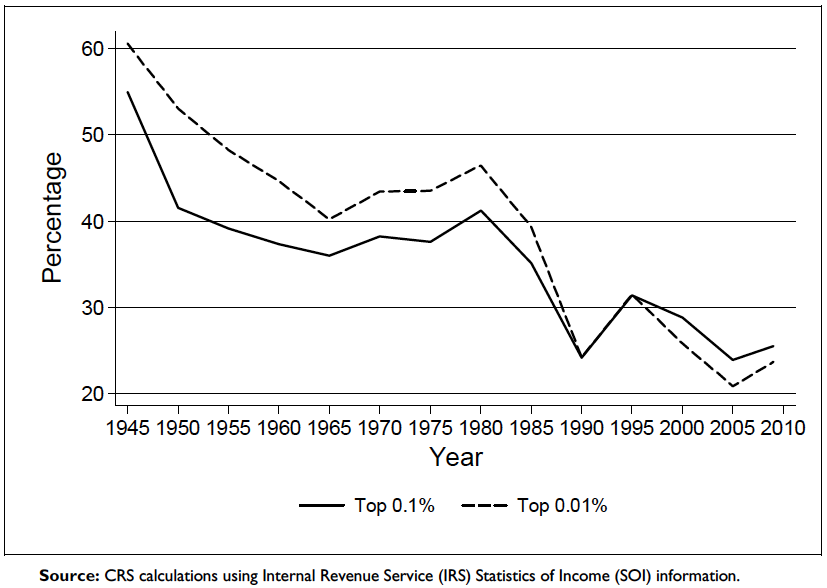
I came across the data below today and I thought I would share it. I certainly don’t claim any strong expertise in tax and economic policy, but I have a fairly good “bologna detector” and when I hear people claim with metaphysical certainty that any kind of increase in taxes on upper income earners is bad for economic growth and job creation my detector goes off. I always wonder how people who believe that explain the extraordinarily high tax rates for upper income Americans during times of great economic growth and high employment. Consider this data from the Congressional Research Service and the IRS and remember it the next time you here people speak with uncompromising certainty of the danger to job creation of higher income rates on the wealthiest among us:


Wednesday, November 28, 2012

John Wimber and the "Prophetic Movement"


Gary Tyra’s The Holy Spirit in Mission is an important book, successful in significant ways and even in its weaknesses an occasion for deep reflection. Tyra, associate professor of biblical and practical theology at Vanguard University, is at his best when he focuses on the biblical and pastoral aspects of “prophetic speech and action in Christian witness”, as the subtitle puts it. In those chapters focused on biblical interpretation and pastoral wisdom Trya provides not only fresh insights but also a model for the kind of scholarship that can effectively bridge the gap between Pentecostal experience and non-Pentecostal habits of thinking. As the global Church becomes increasingly shaped by Pentecostal experiences foreign to the faith journey of many other Christians it is necessary for the good of Christian unity and fellowship that patient, careful work be done to overcome suspicions and misunderstandings between Christians who have experienced the work of the Holy Spirit in different ways. This effort to bridge communities leads Tyra to make an understandable decision to limit his study to prophetic speech and action, and avoid discussion of the ecumenically sensitive topic of modern-day prophets and apostles. Given how controversial this subject is even within charismatic and Pentecostal circles, it is understandable that Tyra would seek to avoid the topic. Tyra skillfully shows how the biblical narrative illustrates the central role prophetic speech and action and he draws on his pastoral experience to suggest ways that openness to prophetic leading can be responsibly incorporated into individual and congregational life.

Had Tyra limited himself to biblical and pastoral counsel his strategy of encouraging the prophetic guidance of the Spirit while avoiding the controversy of a modern day office of prophets and apostles would have been successful. Unfortunately, Tyra decided to devote a chapter to contemporary church history to prove that “missional faithfulness and the global growth of Pentecostalism” are intrinsically tied to prophetic speech and action. Any attempt to demonstrate the role of prophecy in Pentecostalism without touching on the delicate topic of “prophets” is extremely challenging because many of the stories that seem most to validate the power of prophecy in Pentecostalism’s growth are unavoidably connected to the actions of highly controversial prophets. Nowhere is this clearer than in the history of the widely influential Vineyard Churches. Yet, astonishingly, Tyra seeks to tell the story of prophetic speech empowering the Vineyard movement without including the controversy over the role of prophets that caused such division within the leadership of the Vineyard movement. Tyra limits his account to one interview he conducted with Lance Pittluck an American Vineyard pastor and current board member. Pittock claims that the growth of the Vineyard movement in England was due to a prophetic word heard by John and Eleanor Mumford. If this were the simple truth then the story would fit neatly within Tyra's book. Unfortunately, this is only a narrow slice of the story of how supposed prophecy influenced the Vineyard in England. This broader narrative is expertly told in William Kay’s 2007 book Apostolic Networks in Britain, published as part of Paternoster’s “Studies in Evangelical History and Thought” series edited by, among others, Mark Noll and David Bebbington.

In Kay’s telling, the story of the Vineyard in England is inextricably tied to the controversy around the notorious Kansas City Prophets and the broader controversy over modern day prophets. Whereas Pittock’s account of the Vineyard in England focuses on the type of prophetic speech that does not rely or eoncourage a view of an office of prophet, and is therefore easy to fit into Tyra’s broader discussion, Kay’s thicker narrative puts the controversy over modern day prophets at the center of an understanding of how the Vineyard ministry evolved in England and leads to major questions over how John Wimber himself came to view prophetic knowledge. According to Kay, “Paul Cain, the most prominent of the Kansas City Prophets, told John and Eleanor Mumford that the revival would ‘probably find its starting point…when the Lord will just start to move throughout London and throughout England.” What Pittock sees as a wholesome prophecy given by the Mumford’s to Wimber was in fact part of deeply divisive stretch in the history of the Vineyard movement. I quote Kay at length:

Paul Cain went to see Wimber at the end of 1988 to warn him to give greater priority to holiness within the Vineyard movement. Cain brought with him the background influences of the Latter Rain movement....[which] developed an eschatology all of its own. By identifying the new apostles as ‘manifest sons of God’ whose task would be to restore the church, it rapidly generated hyper-real expectation of its proponents and their central place within the unfolding drama of the end times and, in doing so, moved outside the normal parameters of bliblical doctrine…there is no evidence that Latter Rain beliefs were transmitted directly through Cain to Wimber. Nevertheless Cain made an impact on Wimber.

Several participants tell the sotry of these extraordinary events. The meeting between the two men was engineered by Jack Deer, a onetime professor at Dallas Theological Seminary, who had been fired from his position because o fhis conversion to Third Wave beliefs. Deere had asked Cain for a sign by which he could persuade WImber to meet together. Cain replied, the day I arrive there will be an earthquake in your area.’ When Deere asked whether the earthquake would be a big one, he replied, ‘no, but there will be a big earthquake in the world on the day I leave.’ So Wimber reluctantly welcomed Cain to his home in Anahiem on 5th of December 1988. Cain, in prophetic mode, told WImber to ‘discipline and rasie up a people of purity and holiness’ and that Wimber’s role ‘would be significantly altered—more authoritative (not authoritarian) and directive.’ He also told Wimber that, if he issued this call for holiness, Wimber’s son Sean would be delivered ‘from rebellion and drug addiction.’ The earthquake on 3rd of December 1988 occurred at 3:38 am, the day that Cain had reached California. Cain left on the morning of December 7th when the Soviet-Armenian earthquake occurred at 10:51 p.m. (Pacific Standard Time).

In August 1989 Cain prophesied ‘revival will find its starting point sometime in October [of 1990] when the Lord will just start moving  through London and through England’. In June 1990 Sean Wimber came back to the family home and returned to the faith. Wimber saw this as a patterning event symbolic of the global revival. ‘As more prodigals return’, Wimber said, ‘pockets of revival spread throughout the house of God’. In obedience to these prophecies, WImber moved with his family to England and organized a series of regional conferences entitled “Holiness unto the Lord’ throughout the United Kingdom…

The predicted revival failed to materialize. WImber initially attempted to account for this by explaining that revival was to come in stages, but this was unconvincing. In January 1991 at the Revival Fire conference Wimber had to face criticism. He then asked the question, ‘did revival come in October?’ and with evident disappointment he answered it himself, ‘no, it has not in England at this time.’ And he went on to state that, rather than revival, America would experience the judgement of God in the First Gulf War because of the nation’s rejection of the Lord. When the First Gulf War eneded rapidly and without any setbacks for the Americans, the role of prophets, which had been a matter of dispute in the Vineyard since the early 1990s, boiled over at a Vineyard Board meeting at Snoqualmie Falls, Washington, in May 1991. Wimber fell out with Cain and later with the entire prophetic movement: ‘I don’t believe there are such things as prophets today’.

The dramatic difference between Tyra’s telling and Kay’s does not impugn the motives or memory of Lance Pittluck. What Pittluck may have heard was a partial truth, the kind of sanitized history that we are all inclined to pass on about groups we are committed to. Tyra would have been better served by either not trying to use contemporary history as a proof for his thesis or by telling the full history in a way that includes the controversy over modern-day prophets that is so clearly at the heart of the Vineyard’s ministry in England. As it stands, his attempt to simplistically bind his biblical and pastoral wisdom to contemporary history is a significant weakness in an otherwise strong book.


Tuesday, November 27, 2012

Pentecostal/Charismatic self-criticism

Self-criticism and self-analysis is a sign of health for individuals and groups. Every person and movement is open to growth and prone to temptation and decay. The best and most productive criticism is that which comes from within a movement because it demonstrates clearly that such criticism is not "anti" the cause, but is rather deeply concerned for the integrity of the cause. Because a focus of my writing has been with trends in charismatic and Pentecostal circles some, most notably Samuel Rodriguez, have accused me of being somehow "anti-Pentecostal" or secretly uncomfortable with the growth of Pentecostalism around the world. To those critics I offer these words from Lee Grady, the editor of Charisma magazine which is arguably the flagship publication of the charismatic movement. Grady raises concerns that I have never even touched on in my writing and does so with a level of concern and condemnation that is significant to see.


In some charismatic circles today, people are claiming to have spiritual experiences that involve communication with the dead. One Michigan pastor told me last week that some church leaders he knows promote this bizarre practice…Although little is said about these experiences from the pulpit (since the average believer is not ready to handle this "new revelation"), people in some streams of the prophetic movement are claiming to have visitations…And we are expected to say, "Ooooooo, that's so deep"-and then go looking for our own mystical, beyond-the-grave epiphany. That is creepy….Those who seek counsel from the dead-whether through mediums and séances or in "prophetic visions"-are taking a dangerous step toward demonization.
Not long after ecstasy became known as a recreational drug, someone in our movement got the bright idea to promote spiritual ecstasy as a form of legitimate worship…Recently I told a friend in Pennsylvania that when people get tired of this drug imagery it won't be long before we see some Christians having sexual experiences at the altar. "It's already happening," my friend said. He described a recent "worship concert" in which one of the musicians simulated sex while stroking a microphone and whispering sensual phrases to Jesus. What is next-orgasmic worship? God help us…I know of a case where a man was caught planting fake jewels on the floor of a church. He told his friends he was "seeding the room" to lift the people's faith. I know of others who have been caught putting gold glitter on themselves in a restroom and then running back in a church service, only to claim that God was blessing them with this special favor. Where is the fear of God when Christians would actually fabricate a miracle?
This is a time for all true believers with backbones to draw clear lines between what is godly worship and what is pagan practice.